
This is a semi-hard, with exceptional walnut size holes, pasteurized cows milk cheese. After forming and keeping the cream in a salt bath, it is hold in the cold basement for the first two or three weeks, and then transferred to a much warmer maturation room, where the famous holes of this cheese appear in 6-8 weeks. The rind of this cheese is solid and dry, it's colour can be from golden to light brown.
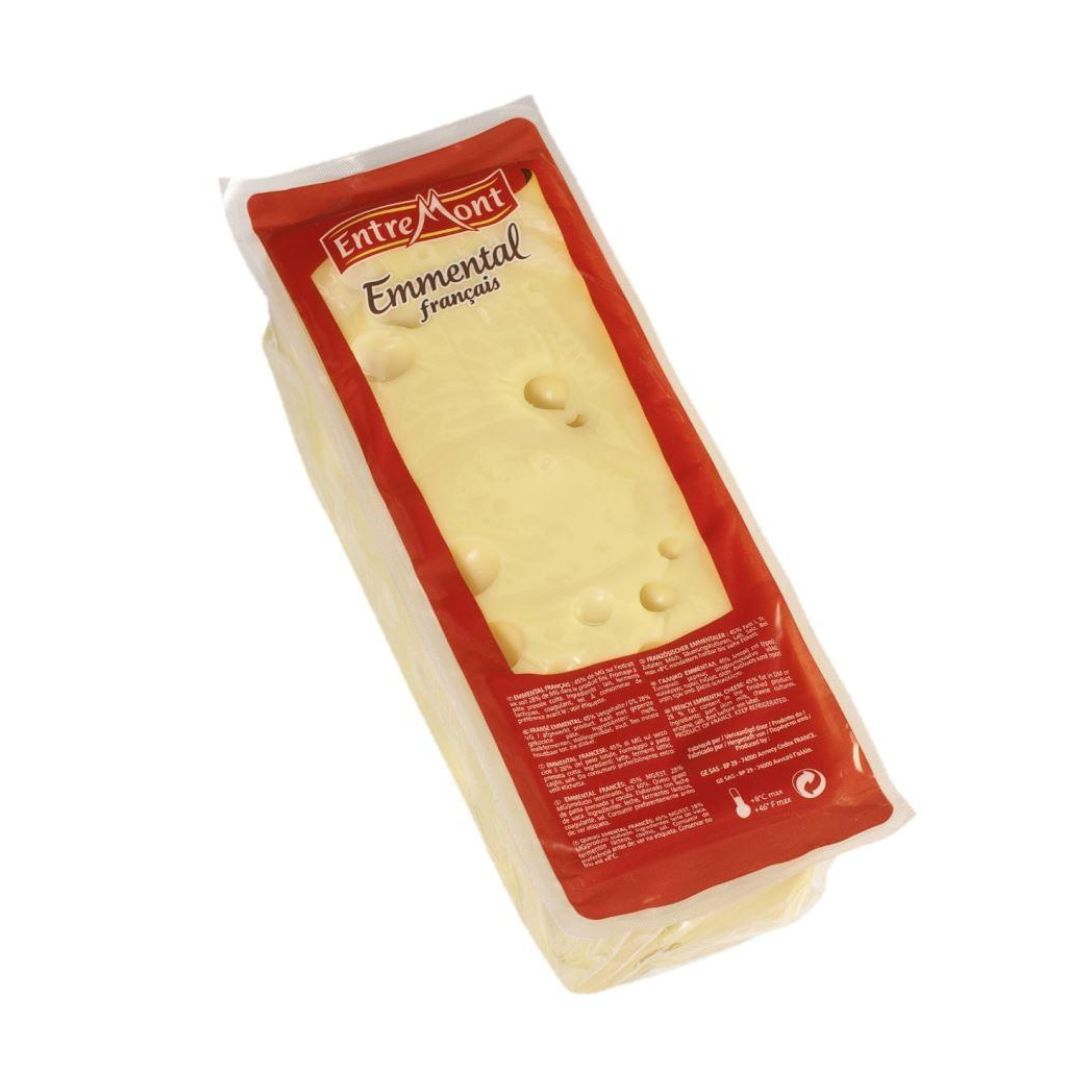

French Emmental cheese, like its Swiss counterpart, is made using traditional cheese-making methods. The production process typically involves the following steps:
Milk Collection: Quality milk is essential for making Emmental cheese. The milk used can come from cows that are raised in specific regions to ensure consistency in flavor and quality.
Milk Pasteurization: The raw milk is usually pasteurized to eliminate harmful bacteria while preserving beneficial enzymes and bacteria essential for cheese ripening. Pasteurization involves heating the milk to a specific temperature for a certain duration and then cooling it.
Curd Formation: Starter cultures of lactic acid bacteria and rennet are added to the milk to begin the curdling process. The milk thickens and coagulates, forming curds. During this stage, the curd is often gently cut into small pieces to facilitate whey drainage.
Cooking the Curd: The curd is then gently heated to a specific temperature. T
Whey Separation: After cooking, the curd and whey are separated. The whey is drained from the curd, leaving behind the solid curd mass.
Molding: The curd is placed into molds to give the cheese its characteristic shape. These molds can be quite large, as Emmental cheese is often produced in 80kg large wheels.
Pressing: The curd-filled molds are subjected to a certain amount of pressure to expel any remaining whey and to help the curd bind together.
Salting: The cheese wheels are either immersed in a brine solution or dry-salted, depending on the cheese producer's preference. Salting contributes to the cheese's flavor and texture.
Aging: Emmental cheese is typically aged for several months in cool, humid cellars. During this time, the cheese develops its characteristic holes and its flavor matures.


Sandwiches, omelette, pasta, cheese fondue, salads, sauces, one as a snack or with different bread.
DrinksRiesling, Gewürztraminer d'Alsace, Beaujolais, Sauternes wines.